
ISBN: 978-81-980164-4-7
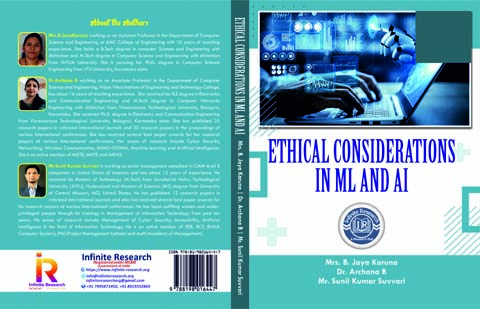
Authors: Mrs. B. JayaKaruna, Dr. Archana B, Mr. Sunil Kumar Suvvari
| Product Price | ₹650.00 | ||
Click to add this item to cart. | |||
| Product Shipping |
|
Book Description
In recent years, the rapid advancement of machine learning (ML) and artificial intelligence (AI) has transformed nearly every facet of our lives. From healthcare to finance, transportation to entertainment, these technologies have revolutionized industries and reshaped the way we interact with the world. However, along with the immense potential that AI and ML offer, there are growing concerns about the ethical implications of their widespread adoption. As we continue to push the boundaries of what machines can do, it becomes increasingly critical to consider the ethical dimensions that accompany such powerful tools. This book, Ethical Considerations in Machine Learning and Artificial Intelligence, was conceived to address these urgent questions. Our goal is to provide a comprehensive exploration of the ethical challenges and responsibilities associated with the development and deployment of AI and ML systems. The contributors to this book are thought leaders, researchers, and practitioners who bring a wealth of experience from various domains including computer science, philosophy, law, social sciences, and policy-making. Together, we aim to highlight not only the technical and legal challenges but also the moral questions that must be addressed as AI continues to permeate society. The rise of algorithmic decision-making has raised pressing concerns about bias, transparency, accountability, privacy, and fairness. Algorithms, despite their mathematical precision, are not neutral entities—they are crafted by humans and often reflect the biases and values of their creators. This book delves into how these biases manifest in AI systems and what can be done to mitigate their harmful effects. Moreover, we explore the challenges of ensuring accountability in AI systems, where decisions made by machines may have profound consequences on individuals and society at large.In compiling this work, our aim has been to provide a balanced and interdisciplinary perspective. Each chapter presents a unique viewpoint on the ethical dilemmas posed by AI and ML technologies, while also offering potential solutions and frameworks for responsible AI development. By bringing together voices from different fields, we hope to foster a richer understanding of the ethical landscape surrounding AI and inspire conversations that can guide future research and development. This book is not merely an academic exercise; it is a call to action. As AI becomes increasingly integrated into our daily lives, it is imperative that we take steps to ensure that these technologies are designed and used in ways that promote the well-being of all individuals, respect fundamental rights, and mitigate unintended harms. We must recognize that ethical considerations are not a hindrance to innovation, but rather a necessary component of responsible progress. We would like to thank all the contributors who have dedicated their time, knowledge, and expertise to make this book possible. Their insights provide a nuanced understanding of the ethical complexities in AI and offer practical guidance for navigating these challenges in a world where technological innovation shows no sign of slowing down. It is our hope that this book will serve as a valuable resource for researchers, practitioners, policy-makers, and anyone who seeks to engage thoughtfully with the ethical questions posed by AI and ML. As the field continues to evolve, the conversations around ethics must remain at the forefront, guiding the way towards a future where technology serves humanity with integrity and fairness.