
ISBN: 978-81-977678-9-0
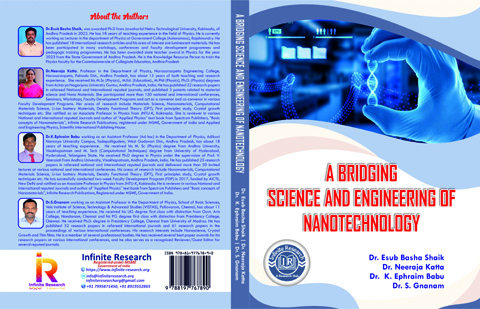
Authors: Dr. Esub Basha Shaik, Dr. Neeraja Katta, Dr. Karumanchi. Ephraim Babu, Dr. S. Gnanam
| Product Price | ₹650.00 | ||
Click to add this item to cart. | |||
| Product Shipping |
|
Book Description
- A Bridging Science and Engineering of Nanotechnology : Nanotechnology stands at the forefront of scientific innovation, embodying the intersection of science and engineering. This multi-author volume, “A Bridging Science and Engineering of Nanotechnology,” aims to explore the vast potential of nanotechnology across various disciplines, highlighting its transformative impact on industry, medicine, and environmental sustainability.
The Importance of Interdisciplinary Collaboration
As we delve into the chapters of this book, it becomes evident that the future of nanotechnology relies heavily on interdisciplinary collaboration. Researchers from diverse fields—such as materials science, biology, chemistry, and engineering—are increasingly joining forces to harness the unique properties of nanoscale materials. This collaborative spirit is essential not only for advancing fundamental knowledge but also for translating scientific discoveries into practical applications that can address global challenges.
Innovations and Applications
The contributions in this book showcase a wide array of innovations in nanotechnology. From advancements in nanomaterials that enhance product performance to applications in drug delivery systems that revolutionize healthcare, each chapter presents cutting-edge research that bridges theoretical understanding with engineering practices. The integration of artificial intelligence with nanomanufacturing processes is also explored, emphasizing how technology can enhance precision and efficiency in production methods.
Ethical Considerations and Future Directions
As we navigate through the potential benefits of nanotechnology, it is crucial to address the ethical implications associated with its development and application. The authors collectively reflect on the
societal impacts of nanotechnology, advocating for responsible research practices that consider environmental sustainability and public health. This book serves not only as a source of knowledge but also as a call to action for researchers and practitioners to engage in discussions about the ethical dimensions of their work.
We extend our gratitude to all contributors for their expertise and dedication to advancing the field of nanotechnology. Their insights illuminate the pathways through which science and engineering converge, fostering a deeper understanding of nanoscale phenomena. We also acknowledge the support from institutions and organizations that promote research in this dynamic field.
In conclusion, “A Bridging Science and Engineering of Nanotechnology” is more than just a collection of academic papers; it is a testament to the collaborative efforts that drive innovation. We invite readers to explore these chapters with an open mind and a sense of curiosity about the future possibilities that nanotechnology holds. Together, let us bridge the gaps between science and engineering to create a sustainable future powered by nanoscale advancements.